
Practical Guides
Log in to saveWhat Is Recycling? Its Meaning and Importance in Marketing
9 min read
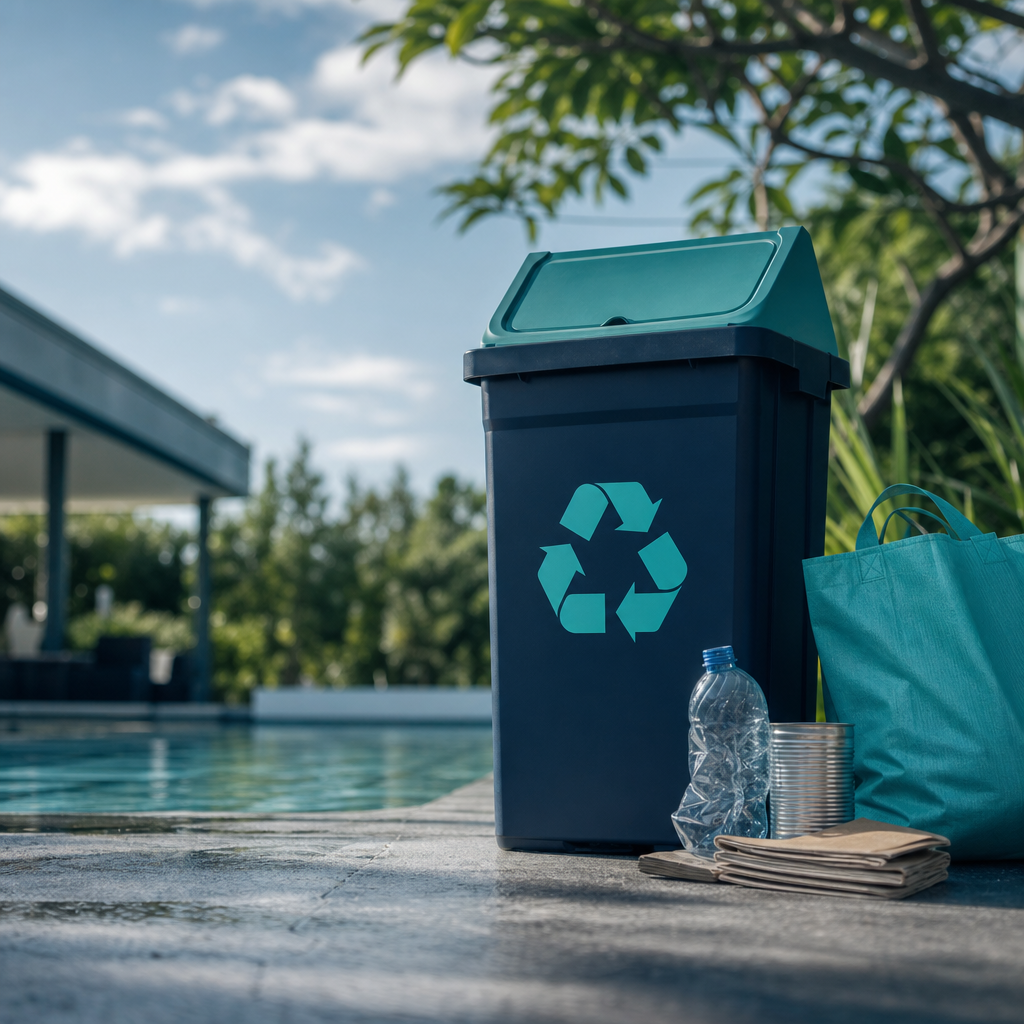
The short answer to the question of what recycling is: it is the process of putting materials that have reached the end of their useful life or become waste through physical and chemical processes to reclaim them as raw material for production. On the marketing side, this concept ceases to be merely environmental knowledge; it transforms into a strategic element that directly affects a brand's positioning, trust narrative, and conversion rates. In this guide, we address both the technical definition of recycling and how to connect this definition to digital marketing decisions, in which situations to highlight it, and which risks to watch out for.
Table of contents
What Is Recycling? Conceptual Foundation
In technical terms, recycling is an environmental management process that encompasses the collection, sorting, processing, and reintroduction into production of waste materials such as paper, glass, plastic, and metal as raw material or products again. This process is one of the fundamental tools for transitioning from the linear "take-make-dispose" economic model to a circular economy model in which waste is reused.
The core objectives of recycling are grouped under four mutually reinforcing headings: conserving natural resources and reducing the need for raw materials; lowering energy consumption and production costs; reducing the amount of waste and air, water, and soil pollution; and contributing to the fight against climate change by lowering greenhouse gas emissions. These objectives form the concrete ground on which brands base their sustainability claims.
For this reason, recycling is not merely "reusing trash." It is a broad system that combines waste management, production, logistics, and consumer behavior. The difference between a brand saying "recyclable packaging" and tying this claim to a documented collection and processing chain begins exactly here.
Defining the Decision: Should You Include Recycling in Your Message?
From a marketing perspective, the real question is not what recycling is; it is to what extent you will translate your brand's actual operational capacity into your messaging.
To what extent do you need to carry your brand's real operational capacity related to recycling —product, packaging, logistics, business partners— into your marketing messages, and how do you do this in a verifiable way?
This decision is the distinction between highlighting recycling "because it's a trend" and building a discourse aligned with production and supply chain realities. The second path produces a verifiable and sustainable narrative. The first path, however, leaves the door open to greenwashing perception and loss of trust. That is why the outcome of the decision is not binary: you choose between not using the message at all, using it in the language of a commitment, or using it as a definitive claim supported by data.
The Mechanism of Recycling and Its Relationship with Marketing
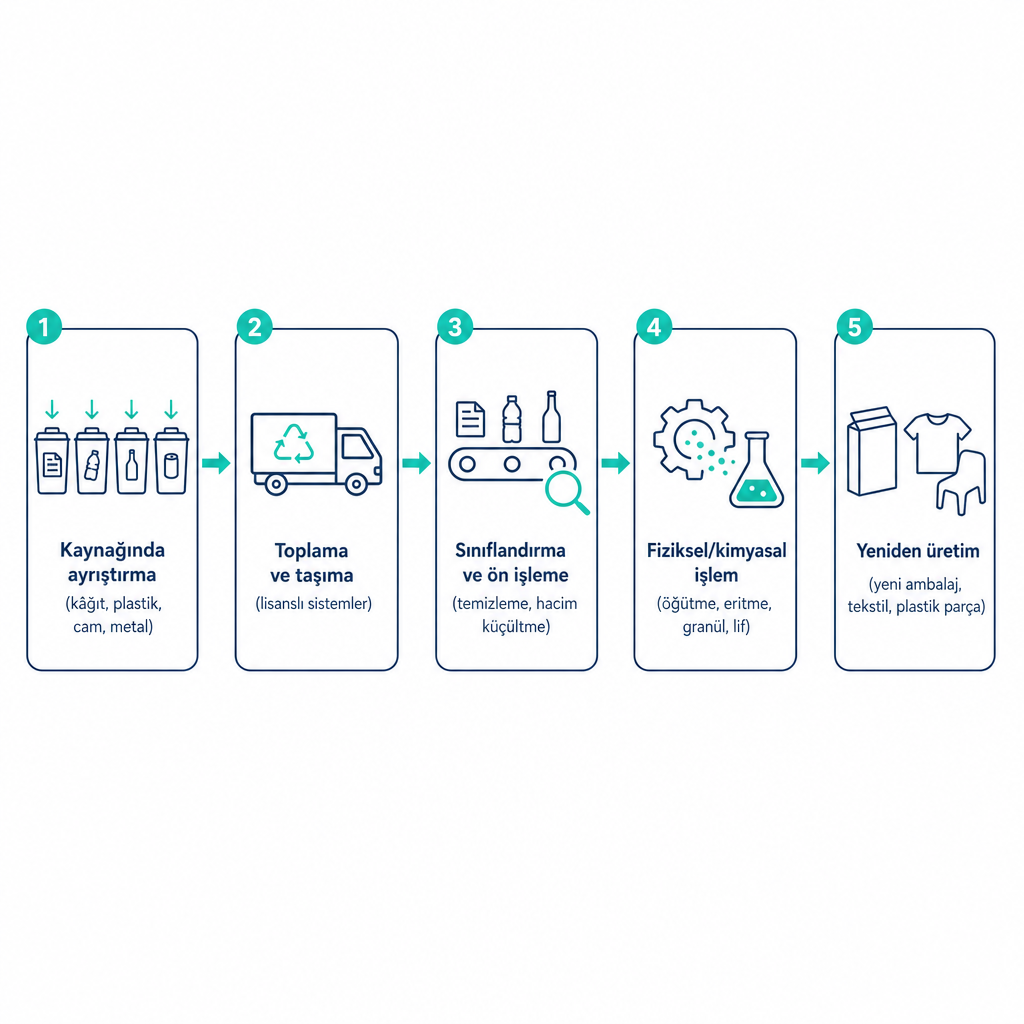
To be able to translate the recycling process into the language of marketing, you must first see the mechanism. Sorting at the source begins with separately collecting waste according to its type. In the collection and transportation stage, these materials are delivered to facilities through licensed systems. In classification and pre-processing, waste is separated by quality, cleaned, and reduced in volume. Then, through physical and chemical processes such as grinding, melting, pelletizing, or fiber production, secondary raw material is obtained. In the final stage, new packaging, textile products, or plastic parts are produced with this raw material.
This chain is the concrete basis for brand claims such as "recyclable packaging" or "x% recycled content." For the marketing team, the critical point is to understand how much these stages overlap with the brand's actual operation; because a message is only as robust as the operation it is tied to.
After understanding the mechanism, recycling takes on specific roles in marketing. In brand positioning, it supports "eco-friendly" or "responsible producer" positions. In product value communication, it adds both functional (less resource use) and emotional (the feeling of protecting nature) layers. On the consumer trust side, brands that provide transparent recycling information see higher loyalty, especially among conscious consumers. On the regulatory side, packaging and waste management obligations steer brands toward documenting their processes and using them in communication. These four roles directly tie the answer you give to the question "what is recycling" to a brand strategy decision.
Making concepts comprehensible to entry-level teams is the first step of this strategy. In our digital marketing terms glossary, we address related concepts such as the circular economy and sustainability in plain language; thus even a technical topic gains a common language within the team.
Recycling Options in Marketing
The recycling message is not just a single sentence; it works through different mechanisms at different touchpoints. Since the job of each channel is different, the form of the message differs as well.
Narrative through product and packaging is the most concrete one. Recycling symbols and short explanations on packaging, transparent data presentation such as "recycled content ratio" on product pages, and guide content of the type "how is this packaging recycled?" fall into this area. This mechanism is especially effective on e-commerce product detail pages and category descriptions; because the user is informed at the point closest to the moment of purchase.
Brand story and content marketing place the concept into context. Explaining concepts such as "what is recycling" or "circular economy" plainly through blog posts and guides; sharing recycling-themed stories and community projects in social media and email campaigns; positioning environmental responsibility through this theme in the brand manifesto are the tools of this heading. Glossary and guide content are also at the center of our publishing approach, which makes technical concepts accessible for entry-level marketing learners.
On the performance marketing side, however, the message is compressed and requires proof. Arguments such as "recyclable packaging" are used in Google Ads and social media ads; creatives tailored to segments with high environmental sensitivity; blocks that explain the recycling process on landing pages in a visual and data-driven way. On performance channels, a short and verifiable claim is more valuable than a long narrative. To adopt a metrics-focused approach while balancing campaign goals with the sustainability message, the short guides in our practical information section can be a helpful guide.
Decision Criteria: When, How, and How Much to Emphasize?
When incorporating recycling into your strategy, four criteria determine the weight of the message.
Operational reality is the first gate. Is your product or packaging truly recyclable, and under what conditions? Are there documented practices in your supply chain? If you work with third-party facilities or business partners, is their licensing status clear? If operational reality is insufficient, positioning recycling as a core value proposition is risky.
The level of data and transparency determines the language of the claim. Can you share concrete data such as recycled raw material ratio or energy savings, and do you have a reporting process to update these? If there is no transparent data, it is safer to build the message in the language of "goal," "journey," and "commitment" rather than an "absolute claim."
The audience's expectation adjusts the dose of the emphasis. If your audience shows high sensitivity to sustainability, this is a baseline expectation; if not, it can be an added value. Correctly reading which balance they seek among price, performance, and sustainability directly determines the weight of the message.
Channel and format fit ensures the same message takes on different forms in different places. Guide formats that answer information requests such as "what is recycling" in SEO-focused content; short and verifiable claims in performance ads; visual storytelling and community engagement on social media come to the fore. Designing the message separately for each channel prevents contradictory statements.
When these criteria work together, the recycling message nourishes brand trust while also supporting the lower stages of the sales funnel. For example, transparent packaging information, when combined with practical methods for increasing e-commerce conversion rates, can create both trust and a reason to choose on the product page.
Risks: Things to Watch Out for in Recycling Communication
Using recycling in marketing brings four concrete risks, and each of them requires a different defense.
| Risk | How it arises | Mitigation approach |
|---|---|---|
| Greenwashing | Unmeasured or unsupported claims are exposed on social media | Using verifiable data and a clear scope |
| Regulation | Misleading claims in packaging and environmental statements can result in non-compliance with legislation | Basing claims on documentation, seeking expert opinion when needed |
| Loss of trust | A single suspicious claim casts a shadow over all messages | Consistent, evidence-based, and modest language |
| Expectation management | Over-emphasis of the theme conflicts with price/performance expectations | Presenting sustainability not as the sole argument, but as a balanced layer |
On the regulatory side, misleading environmental statements may result in administrative sanctions due to non-compliance with relevant legislation; therefore, we recommend that you verify your statements jurisdiction-specifically, with expert opinion when necessary. The common denominator of mitigating risks is clear: verifiable data, plain language, clear scope, and consistency across channels. These four principles keep recycling as a source of trust while preventing it from turning into a defenseless claim.
Since sustainability and regulation topics can change quickly, we recommend following current developments through our news section, where we track the digital marketing agenda.
Frequently Asked Questions
What is recycling, how is it defined in a single sentence?
It is the conversion of waste materials that have gone out of use into secondary raw material through various physical and chemical processes, reclaiming them into production processes.
How is recycling related to marketing?
It enables brands to tell the story of their environmentally conscious production and packaging practices with a focus on sustainability and trust; when used correctly, it has an impact on brand image, conversion rate, and customer loyalty.
Should every brand use recycling as a marketing message?
No. Only for brands with real and verifiable processes related to recycling can this theme create a competitive advantage, especially in e-commerce, SEO, and performance ads.
What is the biggest risk when communicating about recycling?
It is creating a greenwashing perception with exaggerated claims disconnected from operational reality or lacking verifiable data, leading to a long-term loss of trust.
How can I integrate the recycling theme into my digital marketing strategy?
You can integrate it by clarifying your product and packaging data and building a consistent sustainability story across channels with SEO-friendly explanatory content, campaign messages, and landing page blocks.